
Research Areas
The Laboratory for Nanophotonics explores the frontier of light-matter interactions. Our research is organized into four primary thrusts that represent our core strengths and future directions.
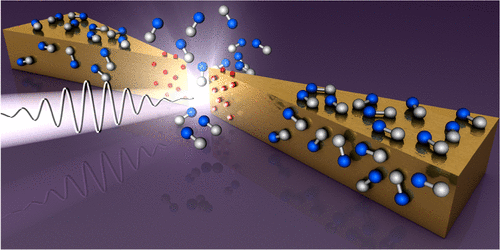
ACS Nano, 18, 29, 18933–18947, 2024
PLASMONICS AND METASURFACES
This thrust focuses on the "original" nanophotonics: confining light to nanoscale dimensions using metallic nanostructures (plasmons). Our researchers are pioneers in designing and fabricating nanoparticles and metasurfaces with tunable optical properties. Key topics include:
- Hot Carrier Generation: Using plasmon decay to create energetic "hot" electrons for applications in photocatalysis and photodetection.
- Surface-Ehanced Spectroscopies (SERS/SEIRA): Developing plasmonic substrates to dramatically amplify chemical signals for ultra-sensitive detection.
- Light-to-Heat Conversion: Engineering nanoparticles for precise, localized heating, with applications from medical therapy (cancer) to solar-powered water desalination.
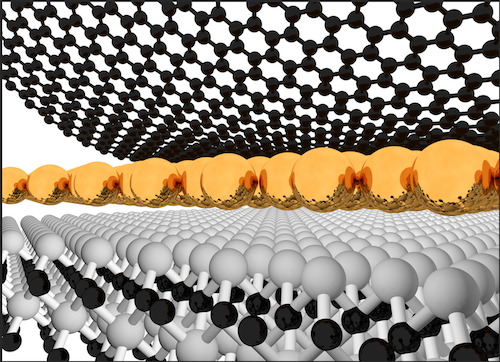
Science Advances, 11, eadw1800, 2025
QUANTUM NANOPHOTONICS & 2D MATERIALS
We explore the quantum mechanical side of light-matter interactions. This thrust leverages the unique properties of low-dimensonal materials- such as carbon nanotubes, graphene, and 2D semiconductors- to control light and charge at the single-particle or single-photon level. Research includes:
- 2D Material Optoelectronics: Investigating the optical and electronic properties of 2D materials for next-generation transistors, photodetectors, and light emitters.
- Cavity Quantum Electrodynamics (QED): Studying how nanophotonic cavities can be used to control the properties of quantum emitters and explore new chemical phenomena (polariton chemistry)
- Terahertz (THz) Spectroscopy: Using and developing unique THz and ultrafast spectroscopy tools to probe quantum phenomena and carrier dynamics in novel nanomaterials, often in high magnetic fields.
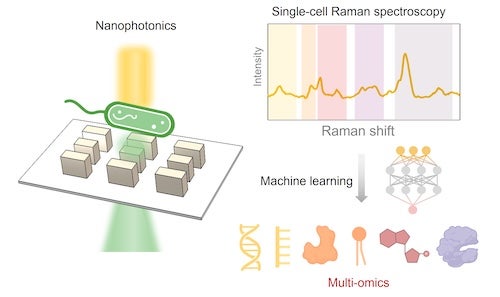
ACS Nano, 18, 28, 18101–18117, 2024
NANOPHOTONICS FOR ENERGY & SENSING
This application-focused thrust translates our fundamental discoveries into technologies that address global challenges. By controlling light and energy flow at the nanoscale, we are creating new solutions for sustainability and health. Key applications include:
- Photocatalysis & Sustainability: Designing "antenna-reactor" nanoparticles that use sunlight to drive chemical reactions, turning waste products into fuel or purifying water.
- Advanced Biochemical Sensing: Developing nanophotonic platforms for early-stage disease detection (e.g., Alzheimer's biomarkers) and other high-sensitivity chemical sensing.
- Molecular-Scale Electronics: Probing the limits of electronic and thermal transport in single-molecule devices.
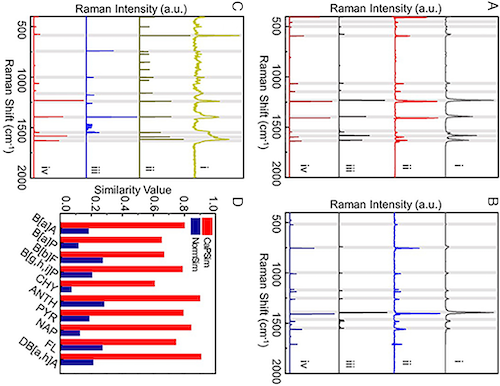
In silico machine learning–enabled detection of polycyclic aromatic hydrocarbons from contaminated soil
PNAS, 122 (19), e2427069122, 2025
THEORY & COMPUTATION OF LIGHT-MATTER INTERACTIONS
This thrust provides the essential theoretical and computational backbone for all LANP activities. Our theorists work closely with experimental groups to model complex nanophotonic systems and predict new phenomena. Research areas include:
- Computational Modeling: Using numerical methods (like FDTD, FEM) and quantum mechanical calculations (like DFT) to simulate how light interacts with complex nanostructures.
- Theoretical Frameworks: Developing new theories to describe quantum plasmonics, strong light-matter coupling, and the behavior of correlated electrons in nanoscale systems.
- Materials & Device Design: Using computational tools to design new nanophotonic materials and devices from the ground up, optimizing them for specific applications.